 Shipping from 15,00 €
 No free shipping
 Delivery within 3/7 business days


Blog
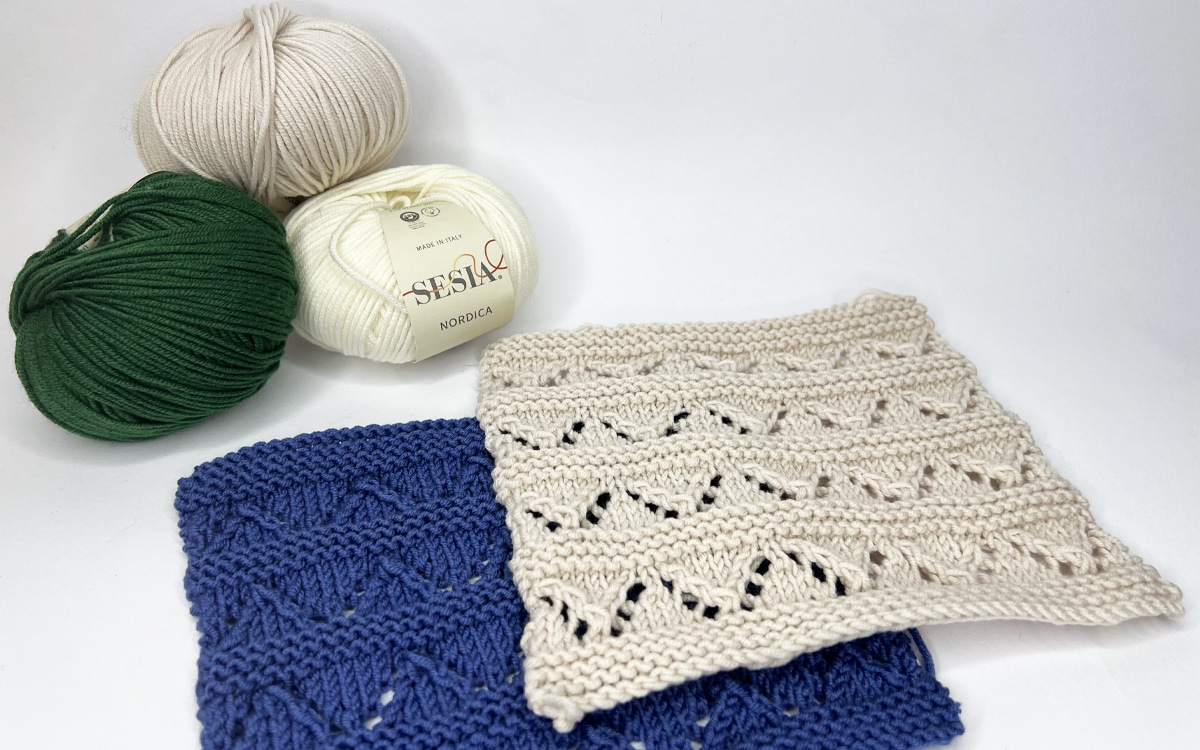
Third tile of the KAL Blanket Afghan: the Traditional Lace
Apr
The time has come for the most fascinating stitch of our Knit-A-Long!
If you have been following our KAL Blanket Afghan since the beginning, you already know how much each appointment brings with it a new challenge, a new stitch to learn and a new piece to add to our blanket. But this third appointment is really special: today we’ll be working together on the third tile, the Traditional Lace tile, an elegant and refined stitch that will give our blanket a touch of great craftsmanship.
What is a KAL and why joining is an extraordinary choice
For those who do not yet know, KAL is short for Knit-A-Long, literally “knitting together.” It is a wonderful tradition in the knitting world in which a community of enthusiasts follow the same pattern, compare notes, share their progress, and support each other along the way. The Afghan Blanket KAL is designed just like this: each date brings us to make a new tile with a different stitch, and at the end we will assemble everything into a unique blanket, personalized with our favorite colors.
Knitwear has a long tradition of sharing: techniques are passed down from generation to generation, and today thanks to the web and online communities this heritage has multiplied tremendously. To participate in a KAL is to connect with this living tradition, made up of real people who share the same passion for needles and wool.
Today’s protagonist: Nordic Wool
For this afghan blanket we are using Nordica yarn, a great quality worsted yarn that is soft and durable, perfect for bringing out the details of the needlework stitches we are going to tackle throughout this KAL. This is one of those fine yarns that make every work special: an even texture that flows smoothly over the needles, deep, intense colors that enhance whatever pattern you choose to work.
For the third tile you will need a 100 g ball of the color you have chosen for this section of the blanket. The recommended needles are 4.5 mm (US 7), and the reference sample is 20 stitches and 27½ needles every 10 cm, worked in fancy stitch. The finished square will measure 20 × 20 cm, like all the other tiles in the blanket.
The heart of the tile: castings and meshes worked together
Traditional Lace is one of those stitches that, at first glance, may seem intimidating, but actually turns out to be logical and satisfying to work. The secret lies in the cast-offs-decorative increases that create small holes in the fabric-and the knits worked together, or decreases that balance the number of knits and shape the geometric pattern.
This combination of cast-offs and decreases is the basis of much of traditional needle lace, and is one of the fundamental principles of creative knitting. Each cast-on opens a space, each decrease compensates for it: the result is a fabric that is both openworked and textured at the same time, with a striking visual effect.
Here is how the pattern sequence for this tile develops:
41 stitches are started with the 4.5 mm needles. The first seven needles are all worked straight, creating a shirred knit edge that will stabilize the bottom edge of the square.
From theeighth need le onward, all even needles (the reverse side of the work) follow a simple pattern: 1 knit straight, then reverse to the last knit, 1 knit straight. This creates a clean frame on the sides of the work.
Iron 9 introduces the lace pattern for the first time. Here we encounter all the key techniques: the cast-on, the knit passed without working it, the straight knit over which the pass is overlapped (creating a slanted decrease to the left), the straight knits, and finally the “2 knits straight together” (slanted decrease to the right). This sequence, repeated from one asterisk to the next, draws the first “V’s” of the lace.
Irons 11 and 13 shift the sequences of cast-offs and decreases, making the pattern “walk” and creating that characteristic chevron or lozenge shape typical of traditional lace. Iron 14 closes the round with the usual inverted even-iron.
These 14 needles make up the complete pattern, which is to be repeated three more times to reach the required height. It ends with one all-straight iron and six more knit stitches before closing the stitches.
Creativity and customization: make the blanket your own
One of the most beautiful things about this KAL is the freedom it leaves to each person’s creativity. In the project documentation you will find as many as three color distribution diagrams: you can choose a version with 5 colors (4 colors for the tiles plus 1 for the border), or dare with as many as 9 colors (8 tiles plus border) for a vibrant, rainbow blanket.
Stitch tile 3-the one from Traditional Lace-appears no less than five times in the diagram of the entire blanket, distributed in strategic positions to balance the overall design. It means that the stitch you are learning today will have an important presence in the final result-even more reason to take the time to understand it well and enjoy the process.
Practical tips for tackling knitted lace
Working stitches with cast-offs and decreases requires a little more attention than plain knitting, but don’t let that discourage you. Here are some suggestions for how best to tackle this third tile:
Always count the stitches at the end of the iron: with cast-ons increasing and decreases taking away, it is easy to lose the thread. You should always end up with 41 meshes. Use a stitch marker every 8 meshes to keep track of the repeat more easily.
Work with good light: the lace holes are small, and cast-offs can hide between nearby meshes. A bright light will help you not miss any.
Don’t overtighten: too tight a weave can make cast-offs barely visible. Look for a medium tension, the one your sample suggests.
Choose a yarn that shows the stitch: fine yarns with smooth surfaces and solid colors, such as the Nordica in this project, are ideal for enhancing traditional lace. Very hairy or multicolored yarns tend to hide details.
One point, one story
Knitted lace is one of the oldest and noblest techniques in European knitwear. From the Shetland Islands to the alpine valleys, each culture has developed its own vocabulary of cast-offs and decreases, resulting in motifs handed down for centuries. Working this stitch therefore means not only creating something beautiful, but also connecting with a long and rich tradition.
And this is exactly the spirit of our KAL: each tile is not just a square of worked wool, but a small world of technique, history, and personal creativity. Together, all the tiles will form something unique-your blanket, with your colors, your hands, your story.
See you at the next meeting!
Share your third tile in the comments or in the KAL-dedicated groups: seeing everyone’s progress is one of the best thrills of this collective adventure. And if you have questions about Traditional Lace, mesh counting or casting techniques, don’t hesitate to ask: we’re all here to learn and grow together.
Now download the pattern here and start creating with us: PUNTO3.KAL.COPERTA.NORDICA
The next tile awaits you – and with it, a new stitch, new challenges and new satisfaction. Happy knitting to all! 🧶